by Maxamina Muro
In our daily lives, we can communicate with people who speak and read entirely different languages with the aid of translation software, though it works best with brief pronouncements. To communicate entire stories, whether a novel, short story, or poem, we need human translators like Kianny N. Antigua. Antigua uses the Spanish language to communicate the complexities of human interactions and is able to translate not just the words on the page but their meaning. Antigua’s translation work connects cultures. It pulls back a curtain that allows a writer working in English to reveal stories for those who live in another country. Or perhaps, like the main character of her current project, Angie Cruz’s How Not to Drown in a Glass of Water, it lives in America but may not have access to a meaningful story due to language barriers.
In addition to being a translator, Antigua is a senior lecturer of Spanish at Dartmouth College and an award-winning author of many original works, including twenty-three children’s books, two poetry collections, a book of microfiction, and a novel. She is also the audiobook narrator of Cruz’s previous novel, Dominicana, as well as the translator of Lucky Broken Girl, by Ruth Behar, and Never Look Back, by Lilliam Rivera.
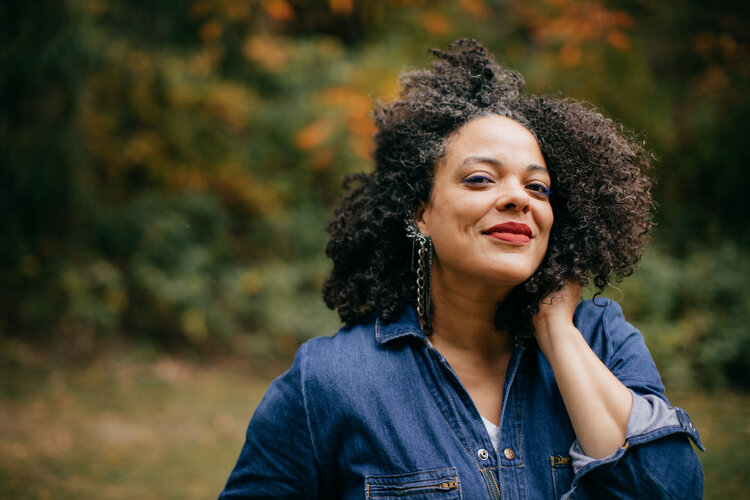
The Coachella Review: How did you get started as a translator?
Kianny N. Antigua: Since I moved to the States, over twenty years ago, translating became a part of my existence, of my everyday life! Professionally, however, since 2017, I have worked as an independent translator and adapter for Pepsqually VO + Sound Design, Inc. The funny thing is that the job was an offer originally made to my partner, who used to dance tango with the owner and director of the company. He was too busy at the moment, so he recommended me! From TV cartoon episodes to novels from English to Spanish, [I’m] loving every experience in between as if it were the first one!
TCR: Do you think the manuscripts you translate influence your own writing in any way?
KNA: I believe every book we read influences the way we write, the way we think. In the case of a translation, I have to delve so much into the content, el significante y su significado, that I end up loving the piece I’m translating probably more than my own work. And, hey, I’m not being modest here—I typically like what I write—it’s just that the connection I make with someone else’s words and worlds is a different kind of gift: a shared one and, therefore, a more sublime one.
TCR: In How Not to Drown in a Glass of Water, the effect of the Spanish language mixed in with the primarily English words heightens the character’s experience of living in a foreign land, of the misconceptions, of the learning, and the yearning for home. How do you keep that feeling when you translate the English into Spanish?
KNA: Decisions, decisions, decisions . . . I think I am so passionate about translating because it keeps me challenged, and definitively grounded. When you read a book in English and all of a sudden you encounter a word in a different language, in your mother tongue, it is always more than a word: it is a feeling, it is a tradition, a frustration, a rabia, a nostalgia. It’s the land calling up to you. A punch in the face, a laughter. Impossible to translate faithfully. However, I usually take advantage of other moments in the text that allow for language to bring what was perhaps lost. I can also use English or, better, Spanglish to bring that multicultural tie, to bring the shared experience of migration, for example. Translations are not exact transcriptions, because languages are as alive as cultures, as complex humans, but when done with heart and respect for everything that words—all of them—encompass, one can do a pretty darn good job, una vaina bien, as we Dominicans like to, and proudly, say!
TCR: When you translate a manuscript, is there any promotion of the finished product involved? Like a book tour or interviews?
KNA: In some cases, like in the case of Dominicana, by Angie Cruz, yes! In other cases, my agent has to remind the publisher to write my name in online stores, for example. It is not a secret that, still today, a lot of publishing houses refuse to credit the translator on the cover of the book. Don’t they know that two people promoting a book is a better deal than just one? Just saying.

TCR: I’ve read about older books that have multiple translations, where the author is long dead and the translators use different words or phrases in certain sections of the book—to achieve tonality, humor, etc. Have you ever read a book that’s been translated to Spanish and thought you may have used different phrases or words to capture the original text?
KNA: Too many, even more so with authors that are still among us. I have even written to publishers, asking them to please consider editing a few words—this even before I took translating seriously. I remember one of the most beautiful books I read to my child when they were little: Quick as a Cricket, by Audrey Wood, the author of the also delightful The Napping House. In its original version, it says, “I’m as slow as a snail,” while in the Spanish, it reads, “[Soy] lento como el caracol.” Choosing to use the indefinite article “a”—“un”—instead of the definite “the”—“el”—changes the meaning of the whole text, and there is simply not a grammatical, regional, or logical reason for it. In the same picture book, we can read, “I’m as sad as a basset”: “Estoy triste como el basset.” I think in this specific case, [the to be verb] ser [“Soy”] would have been a better choice than [the to be verb] estar [“Estoy”]. Further ahead, the author writes, “I’m as cold as a toad and hot as a fox,” and it is translated as “Estoy solo [alone] como el sapo y asustado [afraid] como el zorro.” Wait. What? Why?
Another example is the case of The Poet X, by Elizabeth Acevedo, a book that I also treasure. On the first page of the Spanish version, it reads, “Las bocas soltando una sucesión de letanías en español isleño, mientras esparcen cotilleos incomprobables”: “Their mouths letting loose a train of island Spanish as they spread he said, she said.” This is a case very dear to my heart. Elizabeth is an amazing writer of Dominican descent, and this is a novel that takes place in a Dominican neighborhood, in the Bronx, where no one ever, ever says “cotilleos incomprobables” when taking about bochinche, chisme, embustes, jabladurías [words for “gossip”]. . .
You see, I have thought about this long and hard, and there is no excuse, at this day and age, in a multicultural and globalized world, for a publishing house not to honor the writer’s culture, and the character’s nationality, identity, jargon! All possible, with the right translator, as Amanda Gorman recently brought to light with her rightful demand of a Black translator—“a woman, young, activist and preferably black” [description by Spanish translator Víctor Obiols, who was originally commissioned to translate her poem “The Hill We Climb”], a person that can not only translate her words but feel them as well, and is able to communicate that feeling to the readers.
Minoritized voices will continue to be minoritized if we continue to take away their opportunities to shine, to show their gift, and to bring authenticity to the table.
TCR: Is there a book that hasn’t been translated into Spanish that you would like to bring to that audience?
KNA: Yes. Let It Rain Coffee, by Angie Cruz, Neruda on the Park, by Cleyvis Natera, and The Poet X, by Elizabeth Acevedo, this second time around in Dominican Spanish, preferably Dominican Spanish from the Bronx!
TCR: How closely do you work with an author when translating a manuscript?
KNA: As close as they, or their agents, allow me to. I like to ask questions, give them choices, suggest changes, etc. I want to make sure they are satisfied with my decisions. I want them to feel the final product is still their work, not my writing.
TCR: Do you think artificial intelligence—AI—will take over some aspect of translation work someday?
KNA: NEVER. ¡El tigueraje no se puede robotizar! [in essence, “You can’t replace street smarts!”]
TCR: What is the most difficult part of translating a manuscript?
KNA: On one side, remembering that this is not your work, making sure the intention and voice that is going to be heard will be the author’s, not yours, regardless of how many suggestions and changes you make to the piece. Also, time. In my case, translating is one of my two, sometimes three, paying jobs at a time, and I know I’m not the exception—quite the contrary.
On the other hand, casualmente, today Facebook reminds me that four years ago, I posted this question: “How is it that in literary texts, whether written by Dominicans or with clearly Dominican themes, translated from English to Spanish Spanishisms, Argentinisms, Cubanisms and Mexicanisms are perfectly acceptable, but you have to fight with the editor, and go to church and come back with the publisher to approve Dominicanisms? Linguistic colonialism is not a joke, my friends, cero coro!”
TCR: What do you do when there is no direct translation of a word or phrase?
KNA: I ask around, and do research, and open my creativity box! You know, just the thought of this makes my heart jump. It’s so exiting to find challenges like this in a text. I remember when I was translating Dominicana. I encountered the phrase “falling in love” combined with “that’s why they call it falling. We have no control over it.” Since caer or cayendo en amor is not normative in Spanish, after giving it a lot of thought, I chose to translate it into “el amor es ciego”—“love is blind”; “we are blinded by love.” Another incredibly hard—and fun!—challenge was finding a Dominican modern slang word to translate “deadass,” for example, in Never Look Back, by Lilliam Rivera. But don’t take me wrong, not for lack of Dominican slang from El Alto and the Bronx but for having too many choices: pa’ que sepa, jura’o, sabe como e’ . . .
TCR: How long does it typically take to translate a novel-length work?
KNA: I try to do 1,000 words a day. Sometimes do more; sometimes do a lot less. And then there are those days that life gets in between. So it will all depend. I try to calculate the number of words, and the number of days I’m available, and give myself two weeks more to review. It’s very important that I—that we all!—let the work rest so we can look at it with fresh eyes . . . with an editor’s eagle eyes! Having said that, a lot of publishing houses want you to finish the work before yesterday, and that complicates things a little bit.
TCR: You’re working on a children’s book, by Angie Cruz. Do you ever translate poetry, short stories, screenplays, or plays?
KNA: So far only novels—for children, YA, and adults—short stories, picture books, and cartoon episodes! But I am plenty open to continue exploring, learning, challenging myself, having fun! Ready to bring to light our Dominican and Caribbean voices, and roots, para hacer escuchar nuestras voces y sacar a la luz nuestras raíces dominicanas y caribeñas [“to make our voices heard and bring to light our Dominican and Caribbean roots”].
TCR: Have any of your books been translated to other languages? If so, what language were they written in originally, and what were they translated to?
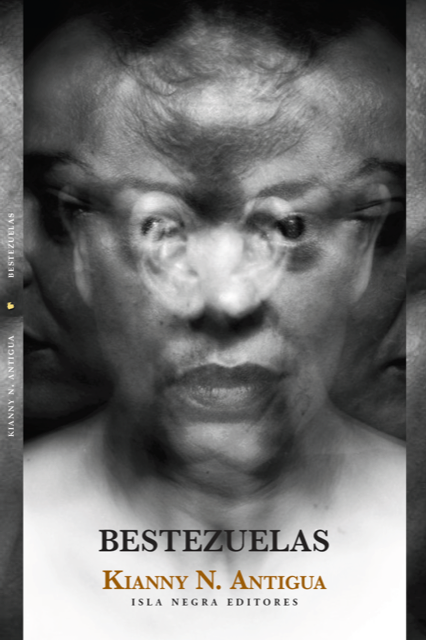
KNA: Yes, some of my short stories have been translated into English, Italian, and French. Working, right now, with Pulitzer Prize winner Achy Obejas, who is translating my most recent collection of short stories, Bestezuelas, into English, and with the also matatana Barbara Flak Stizzoli, from Edizioni Arcoiris, into Italian. I’m so freaking excited!
TCR: What work of your own are you promoting now or getting ready to promote?
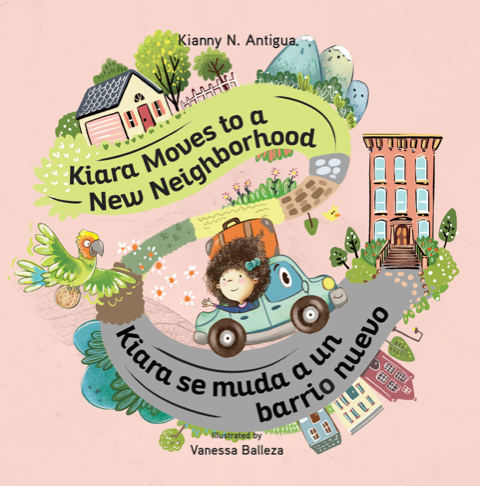
KNA: I am currently translating Lorgia García Peña’s Community as Rebellion: A Syllabus for Surviving Academia as a Woman of Color. After that, I will embark on another incredible exciting translation project with Elizabeth Acevedo’s first novel for adults. Nope, I can’t wait! On my own account, we’re waiting for my newest bilingual—English/Spanish—picture book, Kiara Moves to a New Neighborhood / Kiara se muda a un barrio nuevo, that is coming out at the end of September. In addition, working with my divine agent, Dara Hyde, on a few other children’s books. Crazy busy, and super pumped!
 Maxamina Muro is an emerging fiction writer who recently earned an MFA in Creative Writing Fiction from UC Riverside, where she served as fiction editor of The Coachella Review. Her short story “The ACB Agency” is in the November issue of Voices de la Luna. She has worked as a writer in children’s TV and has published nonfiction in LA Weekly, Valley Scene, LA Parent, and Orange County Parent.