by Anna Reagan
Caroline Leavitt is wearing some bitchin’ earrings. Or piercings. I cannot tell. And it fits her laid-back style and her chic, unaffected black curls. Later, I ask her about them, and she tells me that she does have piercings, but what I saw were her headphones because her coma medication screwed up her hearing. Oh.
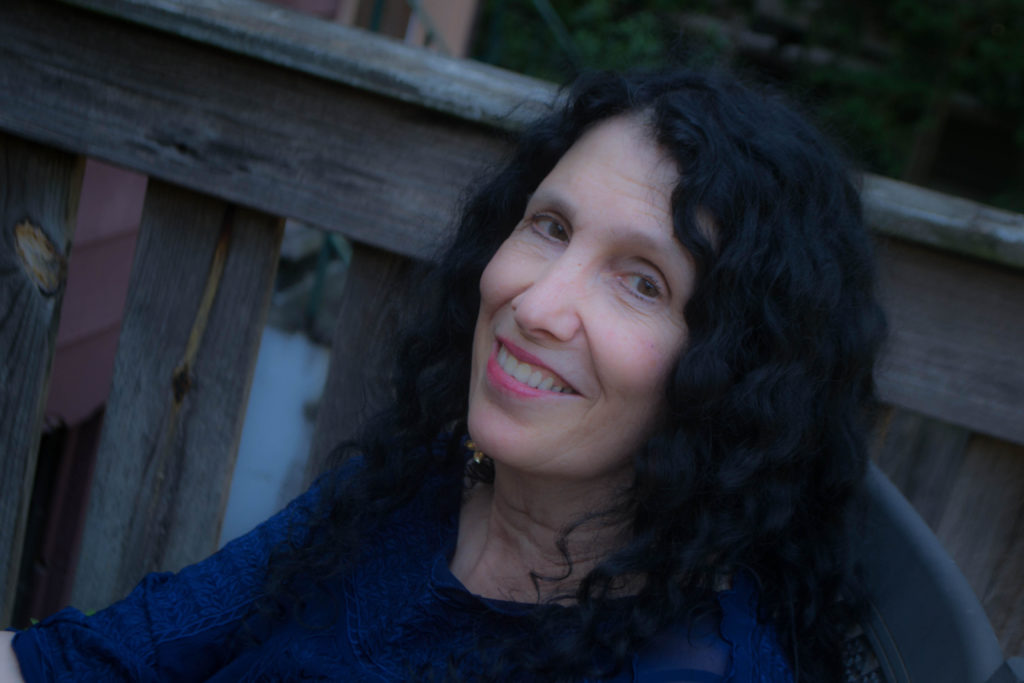
Leavitt, affable and frank, has experience with these questions. After giving birth to her son, Leavitt went into a medically induced coma for weeks and had five emergency surgeries, until a specialist finally diagnosed her with an extremely rare blood disorder. Those sacred first weeks with her newborn were stolen from Leavitt, who can still be triggered by the trauma of her coma 20 years on. With her new novel, With or Without You, she wrestles with her own experience and takes on the mystery of the human brain locked in a coma.
With or Without You opens with Stella and her—on the surface—deadbeat longtime boyfriend, Simon. Simon coaxes Stella into some, let’s say, reckless behavior so she will chill out on her usual argument about wanting a kid and get excited about the prospect of going on the road again with his band. The next day, Stella falls into a coma. The novel, like life, goes on. It follows Simon, Stella, and Libby, Stella’s stern doctor. The two women were friends and coworkers when Stella was a nurse and before Simon took her away from that independent life. The reader is surprised by the amount of action Leavitt is able to pack into a novel where the central theme and action revolve around a comatose woman. Unlike Leavitt’s own experience, Stella is able to remember everything, from her time in the coma until she comes out of it. She can hear her mother talking to her. Can sense Simon’s presence. It’s jarring at first for the reader to lose Stella at the very beginning of the book, but isn’t that just like a coma? Losing someone suddenly and spookily? Though Stella is chained to her hospital bed, “[s]he isn’t afraid anymore. That surprises her.” When Stella wakes up from her coma, she is not a totally different person, but she does wake up to a brave new world where she can shine brighter than before and the people in her life have come together in unexpected—and in some unwanted—ways.
As Stella, who is cognizant, lies in her bed while in her coma state, she thinks of love and her parents’ love and the universe—things one might contemplate while trapped. Leavitt shows the way a coma patient takes stock of her own life; it is not just the coma patient’s loved ones who reevaluate everything.
Stella keeps her memories while appearing to be gone:
‘God,’ someone says. She doesn’t recognize the voice. Stella stopped believing in God when she was twelve. It wasn’t a difficult decision. Back then, her parents worshipped only each other. They called each other five times a day. Stella couldn’t remember being taken to the zoo just by one parent, or to the beach; even when a story was read to her, it was always both of them. One night, she had heard them talking and her mother calmly said that having Stella had been a mistake, and when her father didn’t jump right in and tell her she was wrong, Stella froze. ‘I mean, I love her,’ Stella’s mother had said. ‘I am so glad she’s here, but think how much easier things might be.” Stella, terrified, wondered if any moment she might just die and go to heaven, and if so, what would that be like? The next morning, she made the mistake of asking her mother where heaven was, and her mother laughed and said, ‘Heaven is your father.’ All Stella could think was that heaven didn’t include her.
The past and present rub up against each other in disorienting and poignant ways. What would we remember if we were trying to figure out the state of our existence?
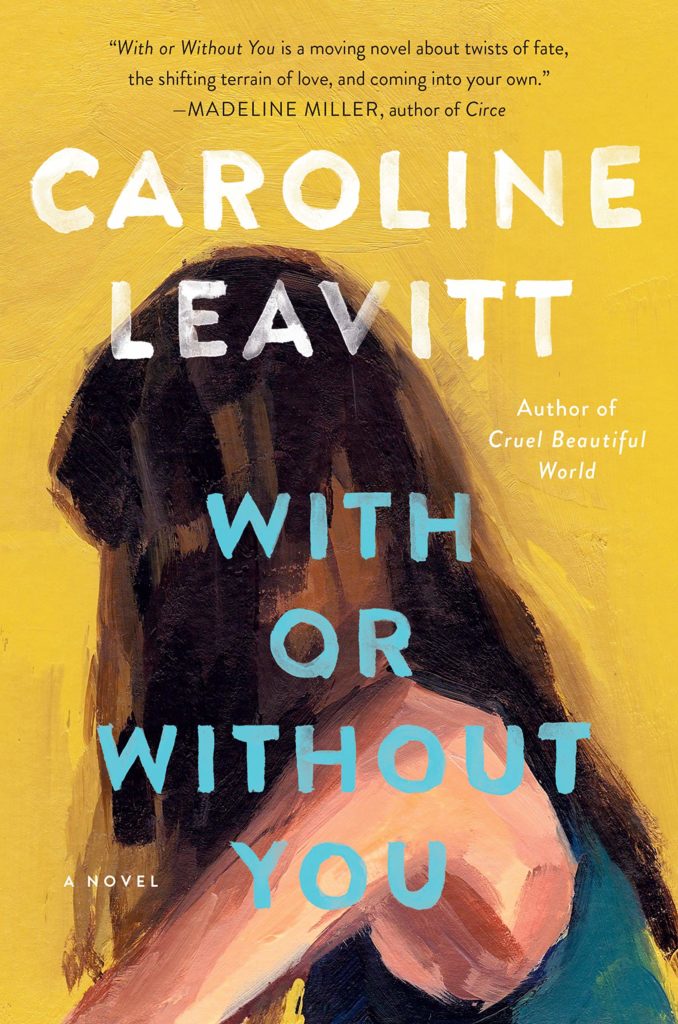 My interview with Leavitt didn’t take place at the Plaza or Barney Greengrass in Leavitt’s home base, New York City. It was a Zoom meeting because—well, you know why. But even with that remoteness, Leavitt and I have the bond of the disorienting experience of having your life ripped away from you. After suffering a near-fatal horseback riding accident, I know all about being hospitalized in a blur and out of control. I understand Leavitt’s frustration that no one was willing to talk to her about her coma after she was out of the woods. Leavitt admits writing this book was, for her, catharsis, even after having written another novel, Coming Back to Me, about a woman in a coma who, like her, did not remember any of her time when she was out of it. Her agent told her she couldn’t write a book about the same thing: “This is going to be different. This will be about a woman who remembers everything and maybe I will be able to process things through her. It was actually that catharsis.”
With or Without You is a quiet novel, and not only because its leading lady falls into a coma. It subtly asks what you owe your loved one when they are out of commission for an indefinite amount of time. Do you betray them when you live your life without them? To what extent are you allowed to go on with your life? And what happens when they return? Are you the one to blame for abandoning or growing apart from the blameless?
Longtime lovers, Stella and Simon’s competing visions for life after forty are coming to a head. Simon had wanted to leave Stella before she fell into her coma. But Leavitt is not unsympathetic to Simon. He is in an impossible position. Leavitt’s characters bloom before the reader. That is not to mean they flourish, but they become more real as they are faced with the reality that goes along with an extreme trauma. The reader can sense where the plot is going, but that is because of the inevitability Leavitt deftly sets out for her characters.
I ask Leavitt if she ever went looking for her own medical records. She must be curious? But she didn’t. Partly because of bureaucracy, she says, but also because she asked herself, “‘Do I really want to do this? What if I find stuff where they made mistakes which they could have …?’ I decided to let that lie.”
But that doesn’t mean she isn’t learning more about what happened to her. She explains: “Before COVID my husband never really talked about it, but he said to me, ‘I am feeling the same amount of dread I was feeling before, when you were in the hospital.’ My first reaction was, ‘Oh my God this is the first time you’ve talked about it, tell me more!’”
Leavitt and I talk for a few minutes about how we understand one another. I tell her I had so much bitterness and moments of self-pity after I was hospitalized. She was given memory blockers, whereas my adrenaline blocked out my memories. Leavitt lights up when talking about the brain. One of her favorite stories is of a man who woke up from a coma able to speak Mandarin fluently. She was given the green light from a friend who works in neurology, she says, to write about what happens to a coma patient who wakes up.
I ask her, at the end of the day, what she wants people to take away from With or Without You. Leavitt mulls it over. “For anyone who has had some trauma, you can create new memories that will supplant the old ones. The saying is ‘we all contain multitudes’ and from a brain-chemistry point of view it’s true. Your brain neurons are firing all of the time and you can change. And I find that really amazing and really hopeful.”
And in these times, it really is.
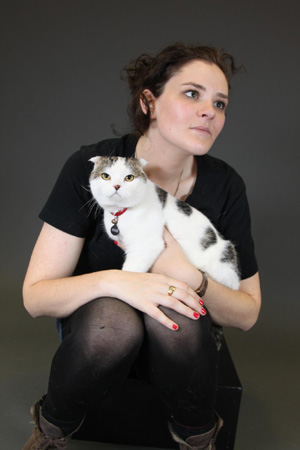 Anna Reagan is a born and raised Los Angelino. As a “suit,” she has worked at places such as TMZ, Chelsea Lately, the Huffington Post, ABC Family, and the United Talent Agency in their Media Rights department but now she wants to be a “creative type.” She is a Medieval England enthusiast and a Real Housewives franchise amateur historian. She is an MFA Candidate at UC Riverside’s Palm Desert Program working on a Historical Fiction novel set at the beginning of the Tudor Dynasty.