by Collin Mitchell In her memoir Grand, writer and comedian Sara Schaefer reflects on her childhood and career by way of a river trip through the Grand Canyon that she took in celebration of her fortieth birthday. “The Canyon will take you apart and put you back together again,” she writes, reflecting on the promise a “bucket-listy” adventure like white…
by Rachel Zarrow According to psychologist and author Mary L. Trump, child abuse is “the experience of ‘too much’ or ‘not enough’.” In her recent memoir of a similar name, Too Much and Never Enough, Mary Trump, the president’s niece, describes the multi-generational cycle of emotional abuse in the Trump family that contributed to the development of Donald Trump’s persona.…
By Paulla Rich Estes Unlatching Dinah’s red leash, I follow her along the chain-link fence that wraps a rectangle around acres of yuccas, piñons, and patches of pale grass rooted in sand. Dinah sniffs a spot where flora has been cleared to create a path and her canine brain logs previous visitors that stopped to pee here, here, and here.…
by Matt Ellis It’s a presidential election year, a time when we are bombarded by political hot button issues from every social and mainstream media outlet with superficial sound bites that often offer little substance but ask us to take sides nonetheless. Immigration ranks among the top. If you want to be better informed about the immigration issue, you need…
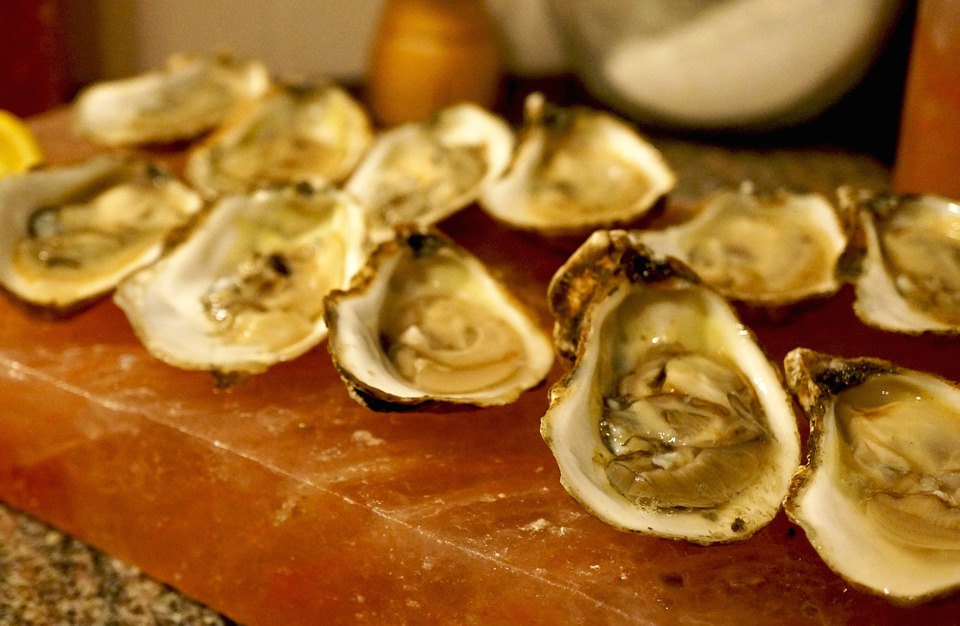
by Tom Zompakos The oyster is the world’s ugliest treat. It’s a chipped up and dirty seashell shaped like a human ear. Inside the shell lies a phlegm-yellow lump. I’m gigging as a fixer (a driver and local guide) for an effervescent editor of Physiocrat magazine named Rosie. Oysters can clean and filter two gallons of seawater in an hour,…
by Mary Higbee
My sister Nancy and I have become used to answering the door to strangers. Since arriving a week ago, people we don’t know have shown up bearing sympathy cards, plates of cookies, and casseroles. They also brought a story or two to tell us about some adventure they had shared with my father.
But today we are too busy to welcome callers. The severe winter storm predicted to descend in twenty-four hours has shortened our time for being in Arkansas. Noon tomorrow is our deadline for starting homeward if we hope to stay ahead of the bad weather. My husband, sister, niece, and I are down to hours to get the house ready to close up and for each of us to pack the chosen keepsakes we are taking.
by Roger Real Drouin
For Sandy Hound (2000 – 2015)
I remember the sweet shade.
Sandy hound scoops the bit of bark and tosses it, catching it in her paws as she did as a pup. Except now, the dirt’s on the blaze of her muzzle that’s showing more white than fawn. She gnaws the bark, cabbage palm worn smooth and the size of a small sea shell, then cradles it in her paws.

The breeze comes across. It’s warm, draped in humidity already, but it feels good. I put my pack down beside the cabbage palm and get out the Dukjug with the small glacier of ice clinking inside and Sandy hound’s bowl, and I rest my hat atop the pack. My eyes adjust to the shade.
BY LAURA BERNSTEIN-MACHLAY
Right now, my small family and I are beginning our second week in isolation here in Detroit.
Well, okay. We’re mostly isolated. My husband Steven and I still make the odd grocery store and pharmacy runs for whatever happens to be available on the shelves. To alleviate anyone’s worries, let me assure you that we’re fine for toilet paper. We haven’t hoarded, though, so in a week or two, we might have to scramble. Or, you never know; maybe the buying frenzy will abate by then as we all fold ourselves like origami creatures into the reality of this extraordinary new existence.
Meanwhile, even with my online classes to manage, my panicked students to soothe, the latest coronavirus updates to voraciously consume, I’ve got lots of extra time—useful for organizing crammed-full closets or meditating. Not so swell when I chew my nails and fret about whatever fresh chaos lurks just over the horizon. About the breaking world and rising infection rates and the recession churning through America’s economy; how, if it lasts, my college-student daughter will surely suffer—as she’s already suffering with her own classes relocated online, with being trapped in the same seven rooms with her fussing parents for weeks or maybe months to come, with her friends, even the local ones, utterly untouchable.
BY LESLIE ARMSTRONG
Andrea Doria (1456 to 1560) was born in Oneglia, west of Genoa. He was orphaned at a young age and became a soldier of fortune. In 1503 he served in the Genoese navy routing the French from Corsica. He spent the rest of his long life serving whoever paid well, commanding his galleys in warfare against the Turks and Barbary pirates and protecting the supremacy and independence of the principality of Genoa. He died a rich and revered man. Many Italian and US naval vessels have been named after him, the most famous of which was the passenger ship SS Andrea Doria, launched in June of 1951, maiden voyage January 1953.
BY JAY ARMSTRONG
Six months after being diagnosed with cerebellar degeneration, six months after a neurologist examined an MRI of my brain, leveled his eyes, cleared his throat and said to me, “you should be dead or in a hospital bed,” I’m staring at my physical therapist, Denise, and she’s daring me to jump.
“Jay, I want you to jump.”
“Like up and down?”
“Yes, like jump up and down.”
I smile and look around the St. Lawrence Rehabilitation Center. There are three other patients in the activity center with me. Two women, both walking on a treadmill, and Bill, a former Navy captain, who is the proud owner of a new titanium hip. Bill is pedaling a stationary bike and, according to St. Lawrence lore, Bill has never smiled. Ever.